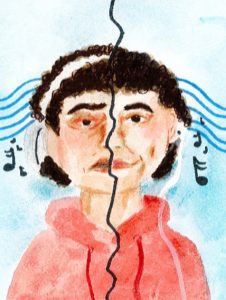
Teenagers cling to music with an intensity that almost feels instinctual. It fills hallways, spills out of car windows, and lives in teens’ ears during quiet moments when emotions feel too complicated to put into words. For many, music isn’t just entertainment… It’s communication. It expresses emotions and provides a space to retreat when the world feels too loud or demanding. With 82% of teens listening to music daily, according to Common Sense Media, it has become one of the strongest forces connecting today’s teens to each other and one of the clearest indicators of how they see themselves.
Music is an emotional anchor, a way to calm down, focus, or survive another overwhelming day. Songs fill the silence that might otherwise be occupied by stress or thoughts teens aren’t ready to face. Research from the American Academy of Child & Adolescent Psychiatry finds adolescents spend an average of 2.5 hours per day listening to music, like senior Emma Balega, who thinks “music during the day helps me decompress, if I’m feeling very overwhelmed- i’ll listen to slow music to help me relax and so forth, also playing music like the violin helps me express my pure emotions.”
Some use playlists to steady their thoughts during assignments or calm nerves before tests. Others use music to amplify emotions. Cooper O’Neil shared, “When I went to a Mumford and Sons concert, everybody was singing. It was different because nobody really listens to them. It intensified my emotions because I would listen to them when I was a really young guy. I grew up with them in Chicago, and I still listen to them to this day. It really was a surreal experience. I felt like I fit right in with everyone else. Their words just hit home.” Music can lift a mood instantly and make a small feeling feel enormous, and most teens wouldn’t trade it for silence.
Teachers view this phenomenon differently. Many adults didn’t grow up with streaming services or the ability to carry entire music libraries in their pockets, so they notice how music follows students into nearly every corner of their lives, Dr. Lisa Bompiani-Smith, the AP English teacher, recalled that, “Music was a huge part of your identity when I was growing up. I was the punk rock girl, and the kind of music you listened to basically defined who you were. My first portable music was a Walkman with cassette tapes, so when a new album came out, we’d sit together, listen to the whole thing from start to finish, and talk about it. It was a really communal experience.”
Bompiani notes that her generation did not have an infinite music library at their disposal, “You’d wait by the radio for your favorite song, learn everything about your favorite bands, and even stand in line overnight just to get concert tickets. Now it feels different because most people stream individual songs instead of full albums, so you lose that group experience. I still mostly listen to the music I downloaded years ago, or play my records when I’m around the house. I don’t know much modern music anymore, but I still love it. Chorus was the reason I went to school some days. Music has changed, but it still influences people; it’s just a lot less of a shared event than it used to be.”
Some teachers worry that music can isolate students, but also see that it can bring them together. Joel Trentin noted, “Music is a powerful tool that can help people communicate, and whether it isolates kids depends on how they choose to use it. When used positively, it can benefit people of all ages and bring them together rather than push them apart.”