United by Music, Divided by Access

Modern Concert Culture
Concerts have always been moments of unity. Standing in a stadium surrounded by dozens to tens of thousands people, everyone singing the same lyrics, watching the same lights, and responding to the same beat, the differences in daily life and background fade. Music has historically been a bridge, connecting strangers through shared emotion and energy. In that space, a crowd becomes something more than a collection of individuals. Every voice contributes, every movement is part of a larger rhythm. For a few hours, life outside a venue ceases to matter. The sense of connection is immediate, tangible, and unforgettable.
But modern concert culture has shifted. Live music is no longer as universally accessible as it once was. In 2025, the average concert ticket in the United States cost $145, a 45% increase from pre-pandemic years. However with the increasing loss in third places, or social environments away from home and work, interest in live music and the concert scene is higher than ever, with an average of 88% of individuals aged 18-25 having attended at least one concert in the past year.
Premium seats on major tours now frequently exceed a $1,500- $1,700 price range, and dynamic pricing, ticket sales where the cost of a ticket is determined by the demand for the ticket, can push even standard tickets far beyond their advertised cost. This shift is especially significant given the sharp rise in concert attendance and overall audience interest, which has made access increasingly competitive rather than more inclusive.
Securing a ticket often feels less like a simple purchase and more like a race, not just against other fans, but against automated pricing systems, resellers, and large-scale buyers. This environment has given rise to what many describe as “Ticketmaster wars” or “StubHub battles.” Compounding the issue, presale opportunities typically only release 5-10% of tickets, and these are often bought in bulk by resellers aiming to make a profit. As a result, fans who miss out on the presale or general sale are pushed into resale markets, where prices are heavily inflated, leaving them with the choice of paying extreme markups or missing the experience entirely.
For many families, the dream of attending a concert has become a matter of financial resources, technological access, and timing rather than simply a desire for participation and experience.
Not all concerts require long-distance travel, and smaller local shows still provide access to live music without high costs or planning. Community venues, high school performances, and local festivals remain accessible to individuals who cannot travel far. However, major tours and artist residencies are becoming increasingly concentrated in a small number of major cities. This trend has been seen with Adele and Cher having held residencies in Las Vegas, as well as U2 performing a 40-show run at the Sphere in Vegas. In the near future, we see Dolly Parton set for a highly anticipated residency at the Colosseum at Caesars Palace, while Harry Styles has scheduled a 15-night run at Madison Square Garden that has already grossed over $63.1 million.
When artists limit their performances to specific regions, attending a concert becomes dependent on more than simply purchasing a ticket. For those living outside these major cities, participation often requires airfare, hotel accommodations, ground transportation, and the ability to navigate complex travel logistics.
Local Shows Versus Required Travel
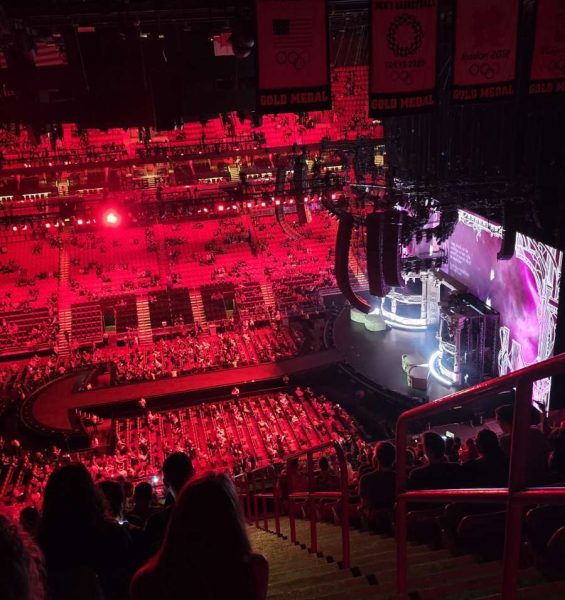 My family and I recently flew out of Pittsburgh, Pennsylvania, on a Thursday morning to attend a Lady Gaga concert on Friday, March 13, at Kaseya Center in Miami, Florida. Because of the scale of Gaga’s fan base and the production demands of her show, The Mayhem Ball, Pittsburgh was not a suitable venue. As a result, my family faced a choice to commit to the trip or miss the opportunity to see the performance altogether.
The arena was filled with thousands of fans, the air charged with energy. Lights moved across the crowd in sync with the music, and the audience felt unified in the moment. While the experience was electrifying, it also revealed what accessibility to live entertainment truly requires. Attending the show demanded both time and financial resources, and what followed the concert further exposed the inequalities in travel and access to cultural experiences.
Not every family can take a week or weekend off to fly across the country. Not every traveller has the financial means, the social networks, or the prior experience needed to navigate a city they have never visited. For some, attending such a concert remains an impossible dream, not because of a lack of desire but because of structural and systematic barriers that are invisible until confronted directly.
The Inaccessibility of Travel
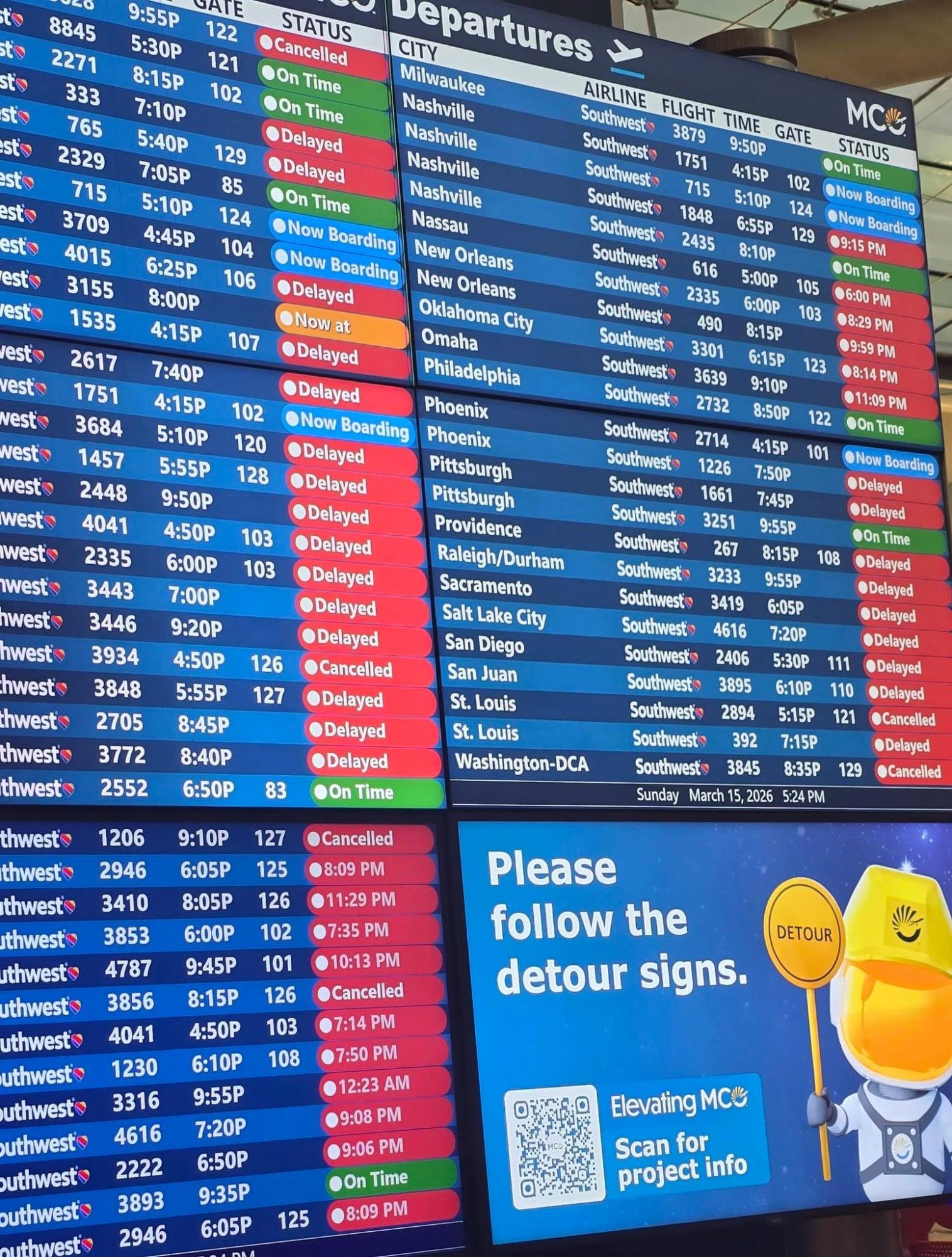
The morning after the concert, we were set to check out of our hotel at noon. My mom and I walked to a nearby Starbucks and grocery store to grab snacks for the flight, only to find out our first flight had been delayed. Within two hours, that flight was delayed twice, then canceled entirely, automatically rebooking us for Monday evening.
That was not an option. My mom had work, my brother had an 8 a.m. class, and I had a volleyball game. We were suddenly trapped in a city over a thousand miles from home with no plan, no way home, and no idea what to do next.
We considered every possible solution: 41 hours on Greyhound buses, 31 hours on Amtrak, a 19-hour drive if we could find a rental car, or somehow getting on another aircraft.
Public transportation in Miami was unreliable and rarely accessible. A 2023 surveying done by Transit Alliance Miami gave the city an “F” for walking, cycling, and transit, and despite recent upgrades, the system faces criticism as inaccessible and unreliable, We took a total of 11 Ubers throughout the trip because buses and metros were impossible to plan and navigate.
In the midst of trying to figure out our next move, I found myself walking through the airport, surrounded by dozens of families, groups, and individuals all attempting to navigate a system that was not designed for them, People of different ethnicities and languages moved in every direction, scanning screens, stopping abruptly, or retracing their steps as if the answer might appear somewhere they had already looked. The issue was not just confusion, it was structural. Information was delivered rapidly, primarily in English, through announcements, apps, and signage that assumed prior knowledge of how air travel and connecting transportation systems function. I watched as families grew increasingly agitated with each other and the situation, not simply because of delays, but because the systems meant to guide them, including flight updates, shuttle routes, and ticketing processes, failed to meet them where they were. Even as employees worked to help, language and cultural barriers interrupted those interactions, turning what should have been simple solutions into ongoing obstacles.
After a while of brainstorming, my mom made the decision to try our luck in the Orlando airport, as she is more familiar there and has connections there, so we made our way to a shuttle stop. It was there the impact of these systematic barriers became even more visible. My family was able to ask questions, search for directions, call for an Uber, and purchase train tickets, actions that relied not just on money, but on familiarity with digital systems, language fluency, and prior travel experience. Around us, other families remained in place, unable to move forward in the same way.
Just a few feet away, a family of four stood huddled around an airport employee. Their voices rising and falling in urgent, fragmented English as they pointed between their luggage and nearby signs, trying to determine which train or shuttle they needed. The employee attempted to help, but the confusion persisted on both sides.
When the shuttle to the Brightline station (the train that moves from Miami to Ft. Lauderdale, and Orlando) did not arrive, we were forced to call an Uber but even that was only a partial solution. Purchasing train tickets required an email, phone number, and date of birth verification, layering additional barriers onto what should have been a straightforward process. Each step demanded access to technology, personal information, and an understanding of how to navigate yet another system. Watching families around us, it became clear that the barrier was not effort or urgency, but access to language, digital tools, and the systems built with certain users in mind. In a space designed for movement, those without that access were left effectively immoble.
My mother, who travels frequently for work, was able to guide us. She knew that getting to Orlando would increase her chances of finding flights north. She understood what lines to stand in, which shuttles to take, and how to reach the right train. Even with her experience, there was no guarantee of success. We waited for a shuttle that never arrived, and then called another Uber to reach the train station, driving in unreliable public transportation like the last nail in the coffin of inaccessibility. Every decision felt precarious, and every moment reinforced how much easier this process is for those with resources and knowledge. Families without financial means, local contacts, or the ability to navigate these systems could have been stranded for days or weeks.
Experiencing Inequality Firsthand
Our arrival in Orlando highlighted further inequalities. Once there, we were fortunate to stay with family friends who helped us get dinner, shared a spare room for the night, and gave us a ride to the airport in the morning. The next day, finally with new plane tickets in hand, multiple flights scheduled or on standby were repeatedly delayed and canceled. Five hours passed at Orlando International Airport as standby and scheduled flights shifted repeatedly. During this time, we met a group of Vanderbilt students whose plans were disrupted as well. The connecting flight was also canceled, and through a combination of timing and luck, they were able to pass off their seats on a flight to Cleveland to us. Without that intersection of resources, timing, and social networks, who knows how long we would have been sitting in the airport.
Watching families and travelers around me stifle made the inequalities painfully clear. Language fluency, financial resources, prior travel experience, and social connections determine who can move through the system and who cannot. Public transit deserts, hotel requirements for credit cards amplified these inequalities. According to recent data, nearly 26% of Americans live in areas without reliable public transit, and up to 40% of transportation needs go unmet because public transit fails to provide them. These statistics are not abstractions; they reflect the very real barriers people face when trying to access the world.
To end my family’s travel chaos, we boarded the flight to Cleveland and touched down at our Ohio destination at around 1 a.m., and thanks to all the kind and helpful people along the way, we were able to finally get a rental car. While Florida does not allow one-way rentals, the Cleveland airport does. Because my family has the financial means, materials and eligibility to get a rental car, we were able to drive home to end our longer-than-expected spring break travels.
Privilege and the Unequal Road to Music
This experience demonstrated how privilege operated in subtle and profound ways. Traveling to a concert in Miami required not just money for a ticket but also the ability to navigate airports, book accommodations, and respond to delays and cancellations. Those without the combination of experience, language fluency, and resources face far greater obstacles.
The magic of live music remains, but access to it is no longer universal. Concert may unite thousands inside an arena, but they quietly exclude countless others long before the first chord is stuck. Passion is the barrier. Desire is not the barrier. The barrier is a system that requires money, mobility, language, and experience just to participate. What this trip revealed is that access is not determined by effort, but by infrastructure and privilege. Being able to attend a concert, navigate uncertainty, and return safely is not simply luck, it is the result of systems they are built to work for some and not others. As a white English-speaking girl from Western Pennsylvania, I moved through things that were designed for me, often without realizing it. Watching others struggle in the same spaces made that invisible advantage impossible to ignore. Inequality is not always loud or obvious. Sometimes it looks like standing in the same place as everyone else, but not having the same way out.