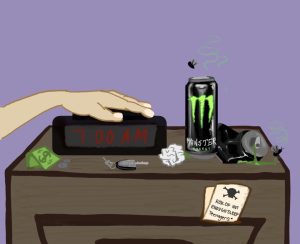
Falling asleep in class used to be a joke, a cliche scribbled into yearbooks and whispered about in hallways. Now, it feels more like a warning. Exhaustion has become a badge of honor among high schoolers, tossed around casually: “I only got four hours last night.” “Same, I’m running on fumes.” What used to signal a rough night now signals normal life for a teen in 2025. Walking through school, you don’t just see tired faces, you see the coping mechanism tucked into almost every hand: iced coffees, Monsters, Starbucks refreshers, and tall neon cans promising focus, energy, and survival. Until we stop treating exhaustion like a requirement and caffeine like a cure, teenagers will keep running on empty.
Caffeine culture isn’t the root of the problem. It’s a symptom. Behind every energy drink is a bigger story: late-night homework, endless activities, glowing screens, and the pressure to keep up with a world that never slows down. So what happens when teens start replacing rest with caffeine? And what does it cost them?
Experts warn that the cost of caffeine-fueled, sleep-deprived teens is extremely high. The Sleep Foundation reports that adolescents need 8–10 hours of sleep each night, yet most manage only six or seven on school nights. Decades of research summarized by BioMed Central shows that chronic sleep loss heightens anxiety, weakens focus, and hurts academic performance. Meanwhile, PubMed highlights numerous studies on later school start times, all pointing to the same outcomes: better mood, sharper attention, higher grades, and even reduced caffeine use. And still, many schools open their doors before sunrise, leaving exhausted students to rely on caffeine as their shield.
It shows. Teachers don’t just see tiredness, they see the consequences of it. “A lot of students use caffeine because they aren’t getting enough sleep, often because of busy schedules,” said chemistry teacher Aaron Richter. “I’ve been teaching for twenty years… and while students have always been a little tired, the caffeine products themselves have gotten stronger, and that’s concerning.”
Richter said he’s watched cans of Celsius, Monster, Aspire, and Starbucks drinks drift across desks with increasing frequency. “Regular coffee doesn’t bother me as much,” he said. “But those higher doses worry me. I think I’ve seen more caffeine use now than in the past, both in the number of students and in how strong the drinks are. Students would need less of a crutch if they focused on getting a good night’s sleep, keeping their rooms cool, dark, and definitely not sleeping with the television on.”
Some students say the effects of caffeine consumption barely register anymore. “I think I used to feel an effect from the caffeine, but because I’ve been drinking it for so long, the effects aren’t really there anymore because I’m so used to it, I just mostly drink it for the taste,” said senior Mitchell Horner.
Caffeine might give students a quick boost, but it also traps them in a cycle of exhaustion. According to research summarized by PubMed Central, more than 70% of teens consume caffeine regularly. An article from the Mayo Clinic notes that many energy drinks pack 200–300 milligrams of caffeine, over three times the amount in a typical can of soda. In the short term, that surge can cause jitteriness, anxiety spikes, and a racing heartbeat. Over time, it can contribute to dependence, chronic insomnia, and even stress on the heart.