Fifty years ago, teenage stress looked very different. Worries centered on grades, sports, and curfews—but not on the constant pull of social media, the pressure of college admissions starting in middle school, or the fear of violence in schools. Today, mental health is one of the most talked-about issues facing teenagers, yet it’s also one of the hardest to solve. Are today’s teens truly more overwhelmed than past generations, or are we simply more willing to name what was once ignored? By comparing teenage mental health now to what it looked like in the 1970s, we can begin to see what has changed, what has stayed the same, and what our schools can do to better support students.
“Kids today are carrying the world on their shoulders,” said Nobalee Butina, a teacher and former social worker who runs the Bridge Room—a quiet space in school where students can take a break, breathe, and regroup when life feels overwhelming. “Life is tough, but you don’t have to carry everything by yourself.”
This room is more than just a classroom—it’s a lifeline. Inside, lights are dimmed, soft music hums in the background, and the usual noise of the school hallways fades away. Some students stay for ten minutes; others for an entire period. Butina said her goal is simple: to create a space where students feel safe being honest about how they’re really doing.
“When I was a teenager, we didn’t talk about mental health at all,” said teacher Tom Pratt, who’s worked in education for decades. “You just had to suck it up and deal with it. Today, we care about it more, which is good—but I also think kids have a harder time coping when things get tough. We try to protect them so much that they don’t always get the chance to fail and learn how to handle it.”
The contrast between past and present is stark. In the 1970s, few schools had counselors dedicated to emotional well-being. Therapy was often stigmatized, and discussions of anxiety or depression were almost taboo. According to historical data from the National Institute of Mental Health, fewer than 10% of teens in the 1970s were ever diagnosed with depression. Today, that number has more than doubled.
Between 2009 and 2019 alone, the percentage of U.S. adolescents who reported experiencing a major depressive episode jumped from 8.1% to 15.8%. By 2023, the CDC found that nearly three in five teen girls felt persistently sad or hopeless—the highest rate ever recorded. The numbers in Pennsylvania mirror that trend: roughly 98,000 adolescents live with depression, and over half never receive treatment.
Locally, the 2023 Pennsylvania Youth Survey revealed that 37.3% of high school students said they felt sad or depressed most days over the past year, and 16.1% seriously considered suicide. In Allegheny County, more than one in three students reported symptoms of depression, and one in four admitted to self-harm.
Teachers say the difference isn’t just in the statistics—it’s visible in the classroom. “Keeping students engaged has always been a challenge,” said teacher Jeffrey Duda. “But I think it’s completely different now than it was when I started teaching. Attention spans are shorter, and if there’s even a second of downtime, students instinctively reach for their phones. It’s not always because they’re bored—it’s how they cope, how they fill silence. But while it looks like they’re more connected than ever, I actually think they’re lonelier than ever.”
The phones Duda mentions have become both a lifeline and a trap. For today’s teenagers, social media defines much of their world—where friendships form, identities evolve, and comparisons never stop. “When you post a picture online, likes and comments really affect you,” said senior Brogan Murphy. “If you don’t get the likes you hoped for, you might start to feel ugly. And if someone leaves a mean comment, that can really hurt your feelings.”
Another senior, Matilda Price, agreed. “When you’re scrolling on TikTok or Instagram, you see people achieving goals—whether in academics, sports, or other areas—that you might feel you can’t reach,” she said. “It makes you think they’re doing better than you, working harder, or getting opportunities you don’t have. That comparison makes you feel like you’re not reaching your full potential.”
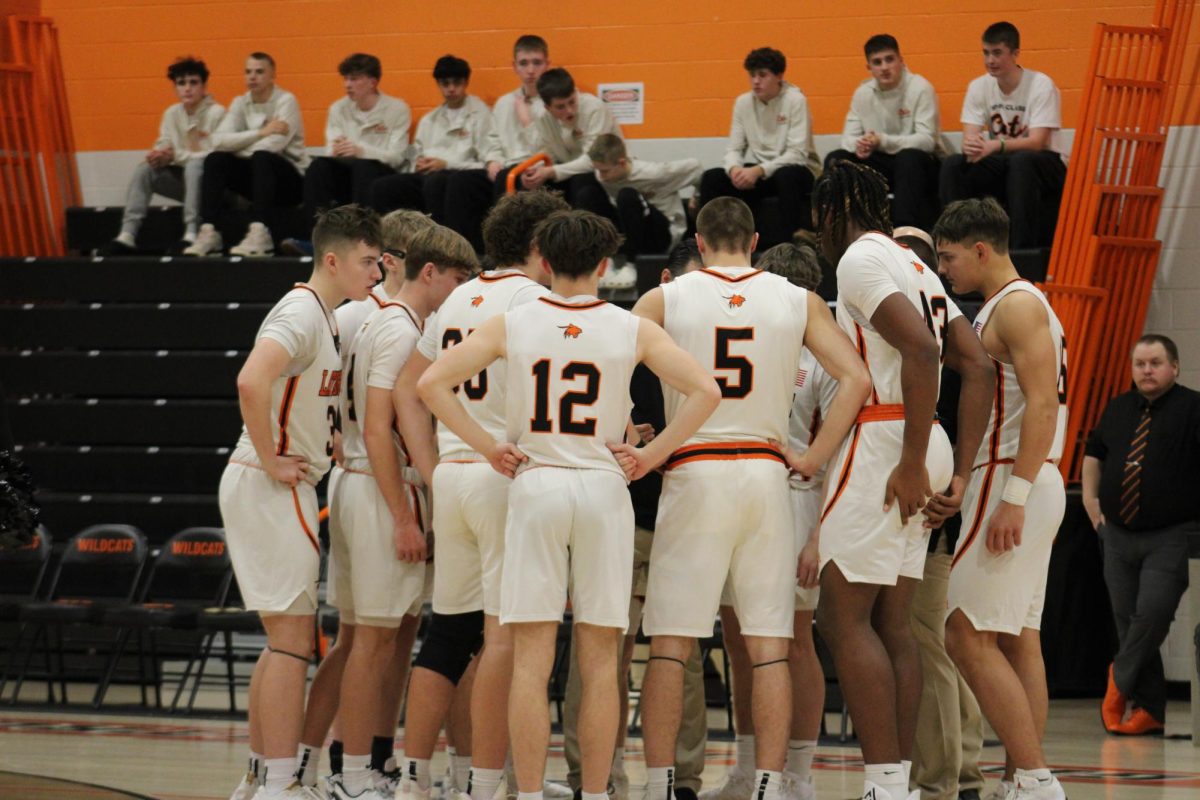
Athletic Director Tyler Gustafson sees those same pressures in sports. “Social media puts kids in the spotlight much earlier than before,” he said. “A bad game used to just be a bad game. Now it’s a bad game that gets videoed, commented on, and shared a hundred times. It adds tremendous pressure. Some players feel like they have to maintain a brand as well as play their sport—and that’s a lot to ask of a teenager.”
Many teachers echo that social media has blurred the line between public and private life, amplifying perfectionism and anxiety. “When most of your life happens through a screen, empathy starts to fade,” Duda said. “You don’t see real reactions, you don’t feel real connection—and that matters.”
Students, too, see how it affects their peers. “One of the biggest mental health challenges for teens today is that they don’t like talking about their feelings,” said one junior. “A lot of people just keep everything to themselves. I have friends who, when I ask if they’re okay, just say, ‘Don’t worry about it, I’ll deal with it myself.’”
Butina has seen that silence turn dangerous. “Over the years, I’ve seen how stigma used to surround mental health,” she said. “People were taught to stay silent, and that silence often turned into bigger problems like addiction or unhealthy coping. Today, kids face a new challenge—constant exposure to the entire world online before they’re even ready to process it. That pressure fuels stress, anxiety, and depression.”
Still, she’s hopeful. “My biggest advice?” she added. “Remember that life is difficult, but you’re not alone. Your struggles aren’t a sign of weakness, and they’re not completely unique—others have faced them too.”
Students say that support from schools makes a difference—but there’s still a long way to go. “Schools should give students more time during the day to see their teachers,” said one senior. “If you’re in multiple AP classes and can only get help twice a week, it’s hard to keep up—especially if you can’t drive or stay after school. We need daily flex time again.”
Even with resources like the Bridge Room and increased counseling staff, many students say mental health support can feel surface-level or inconsistent. According to Safe2Say Something, Pennsylvania’s statewide reporting system, over 70% of student tips now involve depression, bullying, or self-harm.
Educators like Duda believe awareness must turn into action. “We can’t fix everything,” he said, “but we can make sure students don’t feel invisible.”
Fifty years ago, the word “depression” might have been ignored in classrooms. Today, it’s part of everyday conversation—but that doesn’t mean the problem has been solved. Progress is visible, but so is exhaustion.
Teen mental health isn’t a side issue—it’s one of the defining challenges of our generation. Fifty years ago, teens dealt with pressure, but today that pressure is magnified by technology, higher expectations, and constant comparison. The data makes it clear: this struggle is real, and it’s serious. Silence only keeps us stuck. Honest conversation is the first step toward change—and if we don’t face it now, we risk losing another generation to the very silence that holds us back.