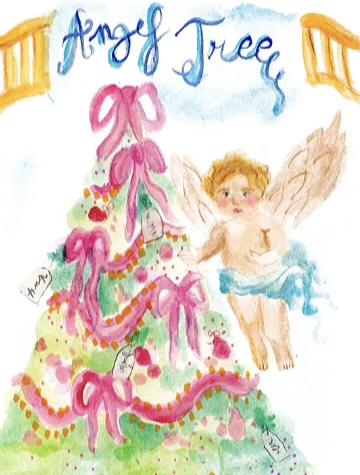
Near the front of Walmart stands a Christmas tree taller than most people in the store, nearly 10 feet tall, its branches are weighed down by dozens of paper tags. Some trees carry upwards of seventy-five names, each one printed in careful handwriting, each one waiting. Smaller versions appear in local shops and community spaces, decorated more with purpose than ornaments. At first glance, the tags blend into the holiday rush, but each one represents a real person whose season depends on what happens next.
Every tag is a person whose holiday depends on the kindness of complete strangers, and it’s not just kids. Many belong to elderly community members who have no nearby family or who are living in assisted-living homes. Their wishes are often simple: warm socks, slippers, soft blankets, crossword books, something cozy to remind them that they’re not forgotten.
For children, participation rarely happens by chance. Many are referred by schools, churches, caseworkers, or community organizations who see firsthand when parents are struggling. Some families have just lost jobs. Some are dealing with medical bills. Some are newly single parents trying to stretch every dollar. Once a child is accepted, someone, usually a caseworker or program coordinator sits down to figure out what they need. Needs always come first: clothes that fit, winter jackets, shoes, pajamas. Only after necessities are covered do smaller wants appear, items meant to restore a sense of normal holiday joy.
Once tags are printed and placed on trees across town, the most visible part of the process begins. Shoppers stop, read a tag, and choose a person. It feels almost magical, like holding a tiny piece of someone’s holiday in your hands. But once the gifts are bought and dropped off, usually at bins near customer service, they don’t just get thrown into random piles. Volunteers sort every item with care, double-check sizes, match gift codes, and make sure no one is missing anything.
Major Christine Kim, Area Commander for The Salvation Army Central Virginia, said, “When community members adopt these angels, they’re not just buying gifts, they’re giving hope and restoring dignity.” in a media release on October 27, 2025.
Misconceptions often surround Angel Trees. Some assume donations fail to reach intended recipients or go toward families without genuine need. In reality, programs follow strict tracking procedures. According to data from the Salvation Army, Angel Tree initiatives serve millions of children and seniors nationwide each year, with local coordinators ensuring unclaimed tags are fulfilled through churches or emergency funds. The system exists to prevent anyone from being overlooked.
Beyond statistics, impact shows up in quieter ways. Seniors frequently send handwritten thank-you notes, expressing gratitude not only for the items received, but for the recognition itself. Studies on charitable giving among older adults show that acknowledgment and emotional connection often matter more than the gift value, especially among isolated populations.
And something beautiful happens too: many kids who once received Angel Tree gifts eventually return as adults to give back. Some even become volunteers. Their perspective is one most people never hear, how one Christmas morning can stick with you for a lifetime and make you want to create that same feeling for someone else. One former recipient, Ashley (@maybashleymarie on TikTok), said that receiving those gifts “made lifetime memories” and helped shape her view of generosity as she grew older.
Walking through the aisles of those stores, it’s easy to overlook all of this. But the truth is, Angel Trees work because real people in the community take a moment out of their holiday errands to pick a tag and make someone’s season brighter. It’s a reminder that giving back doesn’t have to be huge or complicated. Sometimes it’s as simple as choosing a tag because a child’s favorite color is the same as yours, or because an elderly person’s wish for a warm blanket made you think of your own grandparents.
So this season, if you see one of those trees while you’re grabbing groceries or searching for the last box of candy canes, stop for a second. Even one small act, one tag, can make a difference that lasts far beyond December. And in a season built on community and kindness, there’s something incredibly special about knowing that we all have the power to brighten someone’s holiday, no matter their age.
Even if you can’t visit the store to pick a tag, you can still make a donation today: Angel Tree – Salvation Army Western Pennsylvania Division